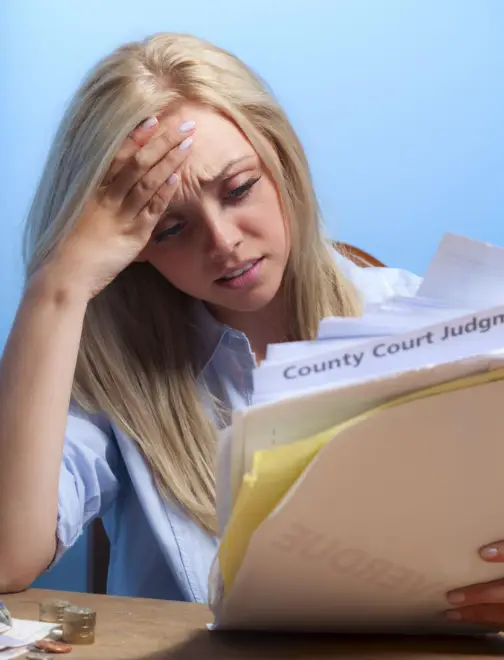
Debt collection lawsuits are rising across the US. Learn what consumers should know about credit card debt, medical bills, purchased accounts, and other consumer obligations move through state court systems.
A July 16, 2026 analysis from The Pew Charitable Trusts found that debt collection filings continued climbing in 2025 in the states and metropolitan areas studied. The increase follows a broader rebound that began after pandemic-era filing declines and has, in many jurisdictions, pushed case volumes above pre-pandemic levels.
The story is not simply that more people are being sued.
The more important issue is how these cases are filed, who files them, whether consumers understand the process, and how frequently lawsuits end without the underlying debt ever being meaningfully challenged.
Many debt collection cases involve balances of only a few thousand dollars. Yet a judgment can lead to wage garnishment, bank account restraints, court costs, additional interest, and financial consequences that continue for years.
The original issue may be a missed credit card payment.
The lasting issue may be a court judgment entered because the consumer did not know how to respond.
Debt Collection Lawsuits Continue to Rise
Pew’s new analysis found that debt collection lawsuits increased during 2025 in several states and major metropolitan areas.
The cases commonly involve:
- credit card balances
- personal loans
- bank debt
- medical bills
- accounts purchased by debt buyers
In many jurisdictions, these cases represent a significant share of the civil court docket.
Pew has previously estimated that as many as 4.7 million debt collection lawsuits were filed in state courts during 2022. More recent data indicates that filings continued rising in 2023, 2024, and 2025.
The growth reflects several overlapping factors.
Consumers have faced persistent inflation, high borrowing costs, increased credit card balances, and household expenses that have outpaced income for some families. Credit card balances reached approximately $1.25 trillion in early 2026, according to reporting on the Pew findings.
When accounts remain unpaid, creditors may place them with collectors or sell them to debt buyers. A lawsuit may follow months or years later.
A Small Number of Companies File a Large Share of Cases
One of the most notable findings is the concentration of lawsuits among a relatively small number of plaintiffs.
Pew reported that LVNV Funding filed nearly five times as many debt collection cases in 2025 as it did in 2019 in the jurisdictions reviewed. The company reportedly accounted for 23 percent of all 2025 filings in the available data.
This reflects a broader change in the debt collection industry.
Consumer debts are frequently sold in large portfolios. A debt buyer may purchase thousands of accounts and then use standardized processes to collect them.
That can include:
- automated letters
- repeated telephone contact
- credit reporting
- settlement offers
- high-volume lawsuit filing
The business model benefits from scale.
The consumer, however, experiences the case individually.
A company may file thousands of similar complaints using the same procedures. The person being sued may never have seen a civil complaint, court summons, or debt buyer before.
That imbalance is one of the most important features of modern debt litigation.
Why Debt Collection Lawsuits Often End in Default Judgments
Debt collection lawsuits frequently end in default judgments.
A default judgment generally occurs when the consumer does not file a response, appear in court, or otherwise defend the lawsuit within the required time.
Earlier Pew research found that courts resolved more than 70 percent of debt collection lawsuits with default judgments for the plaintiff in the jurisdictions studied.
A consumer may fail to respond for many reasons.
The court documents may be confusing. The papers may have been delivered to an old address. The consumer may not recognize the name of the debt buyer. The lawsuit may arrive years after the original account was opened. The person may assume that contacting the collector informally is enough.
Some consumers simply cannot afford an attorney.
Others may believe there is no point in responding because they acknowledge having had an account, even though the amount, ownership, interest, fees, or legal enforceability may still be disputed.
The result is that a judgment may be entered without the plaintiff having to prove its case through a contested hearing.
A Debt Buyer Is Not Always the Original Creditor
Many collection lawsuits are filed by companies that did not originally issue the credit card or loan.
The original creditor may have sold the account, sometimes after charging it off as a loss. The debt may then be transferred through one or more companies before litigation begins.
That creates important questions.
The company filing the lawsuit may need to establish:
- that the account belonged to the consumer
- that the balance is accurate
- that the debt was legally transferred
- that the plaintiff owns the account
- that the lawsuit was filed within the applicable limitation period
A consumer may recognize the name of the original bank but not the company listed as the plaintiff.
That confusion can lead people to ignore valid court papers or pay a company without first confirming that it has the right to collect.
Consumers should not assume that an unfamiliar plaintiff means the case is fake.
They also should not assume that every allegation in the complaint is automatically correct.
How Debt Collection Lawsuits Affect Consumers
Many debt collection lawsuits involve modest balances.
Pew’s prior research found that in some states, roughly half of consumer debt cases involved amounts below $2,000. Credit card, bank, and medical debts were among the most common sources.
A lawsuit over a $1,500 or $3,000 balance may not sound significant compared with a mortgage foreclosure or major commercial dispute.
The consequences can still be severe.
A judgment may allow the creditor or debt buyer to pursue collection methods permitted under state law, including:
- wage garnishment
- bank account attachment
- property liens
- post-judgment interest
- added court costs
The judgment may remain enforceable for years and may sometimes be renewed.
For a household already struggling with basic expenses, even a small wage garnishment can make it harder to pay rent, utilities, food, insurance, or other debts.
The lawsuit can therefore deepen the financial distress that caused the missed payments in the first place.
Credit Card Lawsuits and Consumer Documentation
Credit card lawsuits can be difficult to evaluate because consumers often do not retain account documents indefinitely.
A lawsuit may be filed long after the account was opened and after the consumer stopped receiving statements.
The plaintiff may rely on account statements, electronic records, billing histories, transfer records, and affidavits created from business databases.
The consumer may have only partial records.
This creates a documentation imbalance.
Financial companies can store and transfer account data at scale. Consumers may discard paperwork after several years, especially when an account has been closed or sold.
That does not mean the consumer has no defense.
It means the accuracy and completeness of the plaintiff’s records matter.
Questions may arise concerning:
- disputed charges
- payments not properly credited
- identity theft
- incorrect balances
- unauthorized fees
- mistaken identity
- prior settlements
- bankruptcy discharges
A consumer should review the allegations carefully rather than assuming the amount listed in the complaint is unquestionably correct.
Court Forms Can Become a Consumer Protection Issue
Debt collection cases reveal that court procedure itself can affect consumer outcomes.
Most people sued over consumer debt are not lawyers. Yet they may be expected to understand service rules, answer deadlines, affirmative defenses, hearing notices, evidence requirements, and settlement procedures.
Failing to understand one document can result in losing the case automatically.
Pew has encouraged courts and policymakers to provide clearer information about:
- who filed the lawsuit
- what debt is involved
- how the amount was calculated
- how a consumer can respond
- where legal assistance may be available
Some jurisdictions have experimented with simplified answer forms, consumer help centers, grouped court dates, and volunteer legal assistance.
These changes do not determine whether a debt is valid.
They help ensure that the validity of the debt can actually be examined.
Technology May Be Making Lawsuit Filing Easier
Technology has lowered the cost of processing large volumes of accounts.
Pew cited research suggesting that artificial intelligence and automated tools may contribute to increased filing capacity in contract-related cases, including debt collection matters.
Automation can help companies organize records, generate documents, identify accounts, and prepare complaints.
That efficiency is not inherently improper.
The concern is whether verification and accuracy increase at the same rate as filing capacity.
A system that can generate thousands of lawsuits quickly should also be able to confirm that:
- the correct person is being sued
- the balance is accurate
- required records exist
- the debt has not been resolved
- the claim is filed within the correct legal period
Efficiency should not replace verification.
When automation accelerates filing without improving quality control, small data errors can become court judgments.
Practical Steps for Consumers Who Receive a Lawsuit
Consumers who receive debt collection court papers should take them seriously, even if they do not recognize the plaintiff.
Important steps may include:
Review the deadline
Court papers usually provide a limited period to file a response or appear. Missing the deadline may lead to default judgment.
Identify the original account
Determine whether the complaint identifies the original creditor, account number, alleged balance, and dates associated with the debt.
Review personal records
Look for statements, payment records, settlement letters, bankruptcy documents, identity theft reports, or prior communications.
Do not rely only on telephone conversations
Calling the collector does not necessarily count as responding to the lawsuit. Court requirements must generally be followed separately.
Consider legal assistance
Legal aid organizations, consumer law attorneys, court self-help services, and bar association referral programs may offer guidance.
Keep copies of everything
Consumers should preserve the complaint, summons, envelopes, letters, emails, payment records, and any filed response.
Legal rights and procedures vary by state, so general information should not replace advice about a specific case.
What Businesses and Courts Should Learn
The rise in debt collection litigation should prompt more than concern about consumer payment behavior.
It should also encourage scrutiny of the systems used to file and process cases.
Debt buyers and creditors should maintain reliable procedures for account verification, ownership documentation, balance calculations, and consumer identification.
Courts should examine whether forms and notices make sense to people without legal training.
Policymakers should consider whether data about plaintiffs, case outcomes, default judgments, and collection methods is available to the public.
Transparency matters because debt litigation can affect millions of people while receiving relatively little public attention.
The Original Take: The Real Product Is the Judgment
Debt collection is usually described as an effort to recover an unpaid account.
Once litigation begins, however, the most valuable asset may no longer be the original debt.
It may be the judgment.
A judgment can provide collection powers that an unpaid credit card account alone does not. It may permit wage garnishment, account attachment, liens, added costs, and years of enforcement.
That changes how these cases should be understood.
The lawsuit is not simply another collection letter.
It is a process that can convert disputed account data into a legally enforceable court order.
When that conversion happens through default rather than a contested review, court access becomes a consumer protection issue.
The question is not whether creditors should be allowed to pursue valid debts.
They should.
The question is whether the system reliably distinguishes valid, documented claims from inaccurate, outdated, or improperly transferred accounts before entering judgments that may follow consumers for years.
Conclusion
Debt collection lawsuits are rising across the United States, with a relatively small group of debt buyers and financial companies responsible for a substantial share of the filings reviewed by Pew.
Many cases involve credit card, bank, or medical debts worth only a few thousand dollars. Yet the consequences can include default judgments, wage garnishment, account restraints, additional interest, and long-term financial hardship.
The trend reveals an important gap between formal legal rights and practical access to justice.
Consumers technically have the right to respond, challenge documentation, dispute balances, and require plaintiffs to prove their claims.
Those rights have limited value when court papers are unclear, legal help is unavailable, or consumers do not understand that failing to answer may cause them to lose automatically.
Debt collection lawsuits may be routine business for high-volume filers.
They are life-changing legal events for the people named as defendants.
A fair system must recognize that difference.